Assembly Member Orders Demolition Of Plantain Farms To Combat Open Defecation
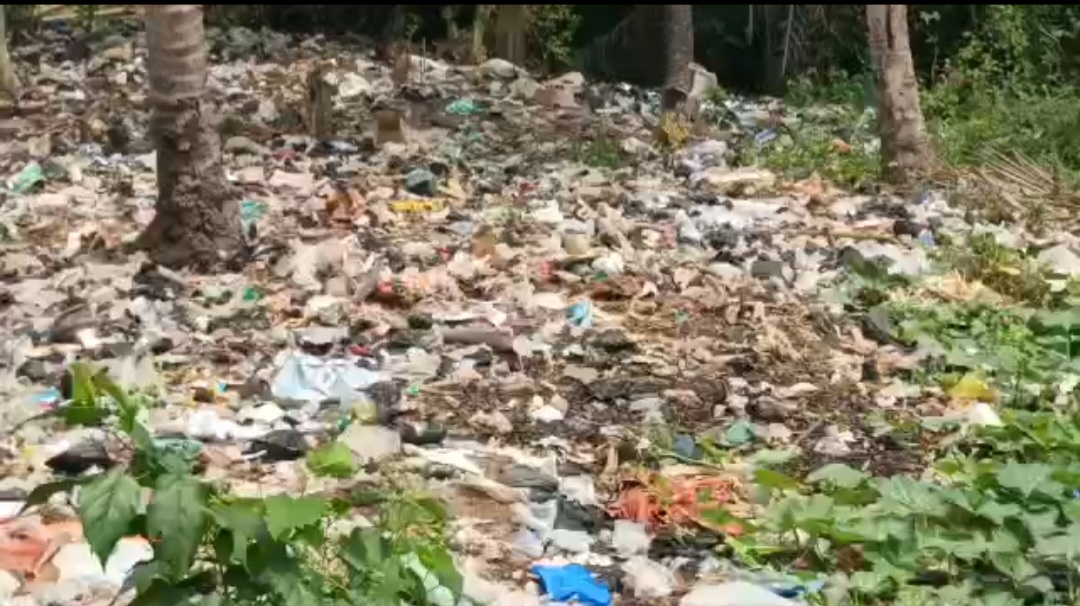
In a controversial move aimed at curbing rampant open defecation, an assembly member in Krofo, Krampkrom, Nkwata,and Gyedu Electra area near Mankessim in the Mfantseman Municipality of the Central Region, hon Nana Yaw Handson has ordered the demolition of plantain farms.

The action, taken in conjunction with traditional leaders, follows a recent clean-up exercise and highlights the growing concern over sanitation in the community.

In an interview with Douglas Oyiboh Amponsah, the assembly member Nana Yaw, explained that the decision was made due to a severe lack of toilet facilities and designated refuse dumping sites within Krofo.

He stated that residents have resorted to open defecation around existing refuse areas, creating an unhealthy environment with persistent bad odors.

“Open defecation has become rampant in the Krofo community because they lack toilet facilities and refuse dumps,” Nana Yaw Handson said in an interview.

“When people offload refuse at the dump site, they also defecate around it, which brings unhealthiness and bad odors to various areas.”

The assembly member emphasized that this drastic measure is part of a broader agenda for national sanitation, inspired by initiatives like Mahama’s National Sanitation Day.
He urged all community members to cooperate with the authorities to transform Krofo into a unique and healthy community, free from preventable sicknesses.
The hope is that by taking such decisive action, the community can move towards a more sanitary and healthier future for all its residents.
The opinion leader for the Odikro, Mr. Kofi Essun, has publicly endorsed a recent initiative by an assembly member aimed at improving sanitation within the community.

Mr. Essun stated that this action is a positive development because it addresses the widespread problem of individuals defecating indiscriminately in the area’s plantain farms.
He expressed pride in the assembly member’s efforts and issued a stern warning to all community members, urging them to cease the practice of dumping refuse and defecating anywhere in the community.

This emphasis on sanitation aligns with broader efforts in Ghana to combat challenges in basic rural sanitation and promote behavioral change among community members .
The mention of plantain farms as a site for this issue highlights the impact on agricultural resources, which are vital for local economies .
The community citizens are commending an honorable assembly member for a good initiative undertaken due to significant sanitation challenges.
These challenges include people littering indiscriminately due to a lack of household toilet facilities, and community refuse dumps being a persistent problem .
In some cases, individuals resort to defecating in plantation farms and near people’s homes due to the lack of proper sanitation infrastructure .
A considerable number of households lack access to toilet facilities, contributing to widespread littering and open defecation .
Community refuse dumps are a major concern, leading to unsanitary conditions .
Efforts have been made to address this, with numerous dumpsites being evacuated in various regions to improve sanitation and hygiene .
The lack of adequate facilities forces people to find alternative, often unsanitary, places for defecation, such as plantation farms and behind people’s houses .
This highlights a critical public health issue that requires immediate attention.
The commendation of the assembly member suggests that their initiative has made a positive impact in addressing these pressing sanitation issues within the community.
In conclusion, the community’s appreciation stems from the recognized efforts to tackle severe sanitation problems, emphasizing the critical need for accessible toilet facilities and effective waste management.
Story by Douglas Oyiboh Amponsah