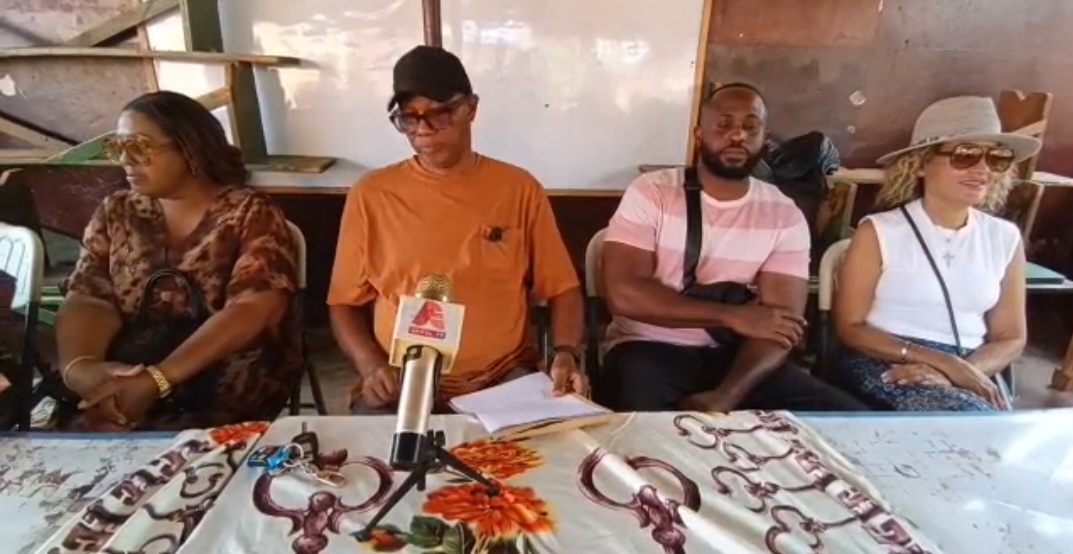
Akaneweo Kabiru Abdul Exposes Sulemana Braimah And Fourth Estate On NLA-KGL Renegotiation
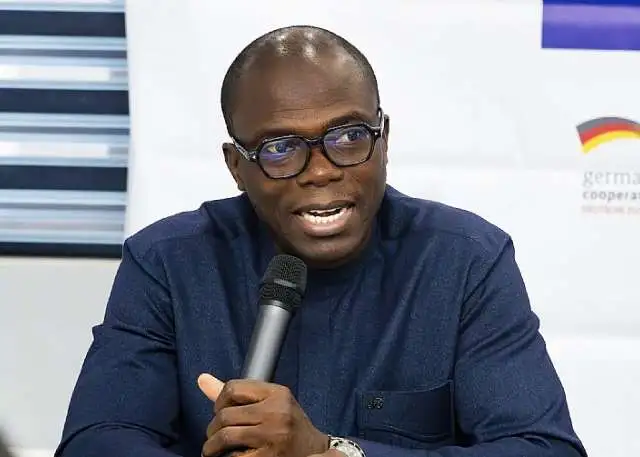
1. Folks, when a Ghanaian businessman is engaging in illegality, we will fight the person. I do not care whether the person is rich, powerful, politically connected, or celebrated. Wrong is wrong. Nonetheless, we should eschew developing a national culture where every successful indigenous Ghanaian business is presumed guilty and subjected to a sustained campaign of public condemnation before all the facts are known. That approach is dangerous for investment, dangerous for entrepreneurship, and dangerous for Ghana.
2 . I have followed the KGL–NLA issue closely since 2025 when The Fourth Estate published what it described as an explosive investigation into the partnership between KGL Technology Limited and the National Lottery Authority. Since then, Ghanaians have been inundated with publications, interviews, commentaries, and public interventions from Sulemana Braimah and The Fourth Estate. But after all the noise, one fundamental reality remains, the official review process did not arrive at the same destination advocated by The Fourth Estate & Sulemana Braimah. And the facts available does not support the stance of The Fourth Estate.
3. From the very beginning, The Fourth Estate’s position was clear. The agreement was branded as a terrible deal that should be abrogated. The picture created was that the arrangement was so fundamentally flawed that it could not be salvaged. The public was encouraged to believe that termination was the appropriate remedy.
4. In response- the committee established by President John Mahama’s intervention did not recommend outright abrogation of the contract. Instead, the committee recommended a stay of the agreement and a renegotiation of the financial terms to ensure greater benefits for the country. That distinction is extremely important because renegotiation and abrogation are not the same thing. And that was the stance of Sulemana Braimah. That the contract should be abrogated outrightly.
5. Abrogation means terminating a contract. Renegotiation means improving a contract. One suggests the arrangement is beyond repair. The other acknowledges that the arrangement has value but requires adjustment. The committee therefore adopted a far more measured, commercially grounded, and legally sustainable position than the position championed by Sulemana Braimah.
6. This is precisely why I am questioning the continued attempts by Sulemana Braimah to create the picture that the committee vindicated every aspect of The Fourth Estate’s campaign. It did not. If the committee had fully accepted the Fourth Estate’s position, the logical recommendation would have been outright cancellation. That did not happen.
7. The facts matter. The Fourth Estate calculated that KGL generated approximately GHS3 billion in gross revenue in 2024 and argued that under an earlier arrangement the NLA could have received approximately GHS615 million rather than the reported GHS118.2 million. Based on this methodology, it estimated a difference of approximately GHS496.8 million. So they said we lost GHS496.8 million. This sound simplicita.
8. You know something, this entire position taken by The Fourth Estate hangs s on a hypothetical assumption that, the 2019 arrangement should have remained unchanged forever and that all commercial conditions would have remained constant. Forgetting that business does not operate that way. Contracts are renegotiated. Risks change. Technology costs change. Market realities change. A comparison between two different contractual structures does not prove wrongdoing.
9. Again, what The Fourth Estate & many people fail to appreciate is that gross revenue is not profit. Gross revenue does not account for prize payouts, telecommunications charges, software infrastructure, technology investments, taxes, commissions, operational expenses, regulatory compliance costs, and other business obligations. Any serious financial assessment must distinguish between revenue and profit. Revenue is not cash sitting in someone’s bank account.
10. The Fourth Estate has also deliberately ignored a critical historical fact. Prior to the digital transformation associated with KGL’s operations, the NLA had never generated anything close to the figures now being discussed. Available industry data indicate that from 2013 to 2020, the NLA generated approximately GHS2.766 billion in total revenue over eight years, with its highest annual revenue being around GHS401 million. Yet critics speak as though KGL merely inherited an already existing GHS3 billion enterprise.
11. The more accurate question is whether KGL helped create and expand a digital lottery ecosystem that generated unprecedented revenue levels. If that is the case, then the debate of whether value was created is a non-starter.
12.Another fact that is often ignored is the contribution KGL makes to the NLA compared to many other operators. Recent Data indicate that KGL paid approximately GHS 173.36 million to the NLA in 2025, while 29 other licensed operators paid a combined GHS 44.9 million. Even the Ghana Lotto Operators Association reportedly acknowledged KGL’s dominant contribution to NLA revenues.
13. This does not mean KGL should not be criticized. It does not mean every aspect of the arrangement is perfect. I am simply saying that the public deserves a balanced discussion rather than a one-sided narrative advanced by The Fourth Estate.
14. Sulemana Braimah has every right to disagree with the committee’s conclusions. He has every right to advocate for stronger action. What he does not have is a monopoly over truth. The Republic of Ghana is governed by institutions, laws, and contractual processes not by media campaigns.
15. Must the Republic be tied to the toes of whatever The Fourth Estate says? Certainly not. Public interest cannot be dictated by a single individual. Contractual relationships cannot be determined by someone’s emotional outburst. Governments must act based on law, evidence, commercial realities, and the national interest.
16. The ongoing process is a legal and commercial renegotiation involving relevant stakeholders. The objective is to secure a better deal for Ghana through lawful engagement and commercial negotiation. That objective is entirely different from the impression that has been created in some quarters that the committee endorsed their absurdity.
17. The reality is straightforward. The committee found room for improvement. It sought better terms for Ghana. It did not recommend destroying the relationship altogether. That distinction alone should force every fair-minded observer to acknowledge that the committee’s position was more nuanced than the one advanced by The Fourth Estate.
18. We need investigative journalism. It is an indispensable pillar of democracy. But journalism must not become self-serving activism. Journalists must be prepared to have their assumptions, calculations, interpretations, and conclusions subjected to the same scrutiny they apply to others. They shouldn’t mistake their position on issues as sacrosanct.
19. At the end of the day, the KGL–NLA issue is not a battle between good and evil. It is a commercial and policy dispute about how the benefits of a rapidly growing digital lottery ecosystem should be shared. The task before government is not to destroy value but to maximize value for the Ghanaian people.
20. If there is illegality, let it be proven. If there is corruption, let it be prosecuted. But if the issue is fundamentally about obtaining a better financial arrangement for the Republic, then honesty demands that we call it exactly what it is a negotiation issue, not the grand scandal that The Fourth Estate & Sulemana Braimah attempted to portray.